

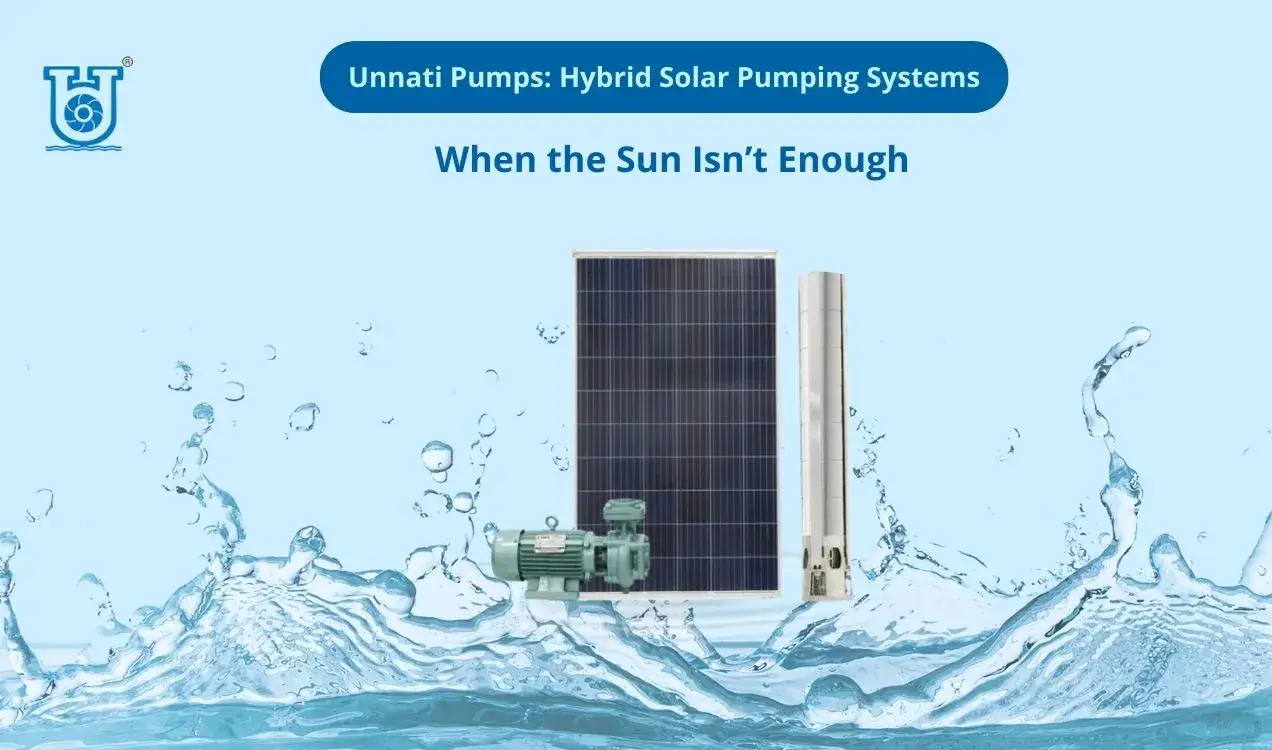
Due to current groundwater issues, a consistent, reliable water supply is critical for agricultural, livestock, and rural communities. Hybrid solar pumping systems emerge as a trusted solution as they are engineered to deliver uninterrupted water pumping performance. By seamlessly combining solar energy with auxiliary power sources like grid electricity or diesel generators, they can ensure a single and continuous water supply solution. Designed to operate efficiently even when the solar irradiance is low or absent, the hybrid solar pumping can offer you the advantages of sustainable water management throughout the years.
Take expert advice to overcome the challenges of a consistent water supply while maximizing solar utilization.
Necessity of Hybrid Solar Pumping Systems
Hybrid systems are most effective in today’s context as they provide a sustainable and cost-effective solution to farmers experiencing variable solar conditions. Providing a reliable and round-the-clock irrigation and water supply, these systems offer the advantages of remote monitoring capability, ease of use, maintenance in isolated locations, lower operational costs, maximizing solar energy use, and minimizing environmental impact.
The pump set (surface or submersible), motor, controller, and power source are integrated to provide the farmers with an excellent user experience. Due to the typical configuration, the hybrid solar pumping systems can automatically switch or combine power inputs to maintain optimal water discharge and pressure. Overcoming the limitations of traditional solar-only pumps, the hybrid systems can ensure water supply continuity and operational flexibility to support the needs of sensitive crops or livestock.
Working Principle of Hybrid Systems
Under the influence of strong sunlight, solar panels can maximize energy extraction by powering the pump through the controller using MPPT. In case of solar irradiance falls below the needed level, the controller reduces the pump speed. Hence, matching the available power or supplementing it is possible by drawing from the grid or generator power without interrupting water delivery.
This seamless switching ensures the following aspects
- Consistent running of the pump,
- Maintaining crop irrigation schedules, and
- Livestock watering
The hybrid system can offer you maximum flexibility due to its following configuration –
- Solar-priority operation,
- Optimizing power use for its time-based scheduling, and
- Storage-focused pumping
Uphold your water security throughout the seasons and reduce environmental impact only with hybrid solar pumping systems. Know the operating modes and principles to optimize costs and performance.
Only Solar Energy isn’t Enough – Explanation
Entirely relying on sunlight, traditional solar pumps provide water output, which is directly proportional to solar irradiance. Despite being effective under bright and clear skies, traditional pumps experience the following challenges –
- Overcast or rainy weather causes reduced flow due to limited solar panel output.
- Low-angle sunlight in early mornings, evenings, and winter months resulted in limited pumping hours.
Negative Impacts –
- An uninterrupted water supply is necessary for critical irrigation and livestock, irrespective of weather conditions.
- Even a brief interruption in pumping systems can cause huge risks, like crop yield loss or livestock distress.
To avoid these uncertainties, farmers are compelled to install oversize solar arrays, which increase upfront costs. As traditional solar pumping systems can put you in a grave situation, like water shortages, a hybrid one emerges as a dependable solution. Avail the benefits of a combination of solar efficiency and reliable backup power to get the most effective outcomes.
Benefits of Using a Hybrid Solar Pumping System
Before opting for hybrid pumping systems, look into their advantages –
- Safeguard your crop yields, livestock health, and domestic needs with this system. It can ensure a year-round water availability despite weather variability or grid instability.
- This system can reduce your dependence on diesel and grid power. By lowering operational costs and exposure to fuel price volatility, you can keep an eye on your wallet.
- The solar-driven operation minimizes carbon emissions, and as such, it promotes sustainable farming practices.
- Hybrid systems are known for ease of use due to intelligent controllers. By providing the benefits of seamless power switching, remote monitoring, and fault alerts, you can enhance system management and reduce downtime.
Other Advantages
The hybrid pumping systems offer many protective features like over-voltage, under-voltage, over-current, and dry-run prevention to enhance durability and operational safety. Apart from balancing capital costs and water security requirements, the hybrid one can empower users with the following benefits –
- Real-time system data,
- Energy consumption analytics,
- Remote configurability
You can also access information on operational anomalies, which will enable you to maximize system uptime and efficiency, including facilitating prompt maintenance. So, embrace hybrid solar pumping systems to avail optimal performance without bearing excessive upfront investment.
Choose Optimal Hybrid Pumping Solutions
Selecting the right hybrid system can be your ideal option to reduce dependence on fossil fuels and support sustainable farming practices. Know the following factors for maximum efficiency –
- Fulfilling the daily water demand of crops, livestock, and domestic users irrespective of seasonal variation.
- Total dynamic head including static water level, drawdown, elevation, and friction losses.
- Matching the local solar radiation patterns and seasonal sunlight availability.
- Recognized for year-round availability, reliability, and cost of backup energy sources.
- Managing budget trade-offs between solar array size and backup capacity.
Only use an ideally sized system that maximizes solar power use while maintaining backup capacity.
Unnati Pumps: A Global Leader in Hybrid Solar Pumping Systems
Due to over 55 years of manufacturing expertise, Unnati Pumps has become a global leader in water pumping solutions. Recognized for quality and innovation, its hybrid solar pumping systems also top the chart due to the following features:
- Durable stainless-steel pumps,
- Efficient motors,
- Advanced controllers, and
- Certified long-life solar panels designed to withstand harsh environments.
Trusted in over 50 countries for its ISO-certified products, the company has also developed its markets in areas with challenging climates and unreliable grids. Unnati’s commitment to customer support, spare parts availability, and continual R&D advances helps to promote its hybrid solar pumping solutions as an industry-leading performer.
Conclusion
The great features of hybrid pumping solutions and Unnati’s quality and innovative aspects help to support sustainable farming practices irrespective of weather variability. The integration of the best of solar technology and backup power can ensure an uninterrupted and efficient water pumping system, essential for modern agriculture and rural communities. Finally, manage your requirements of energy-efficient systems and high-performance criteria by perfectly balancing eco-friendliness and a customer-centric approach.