

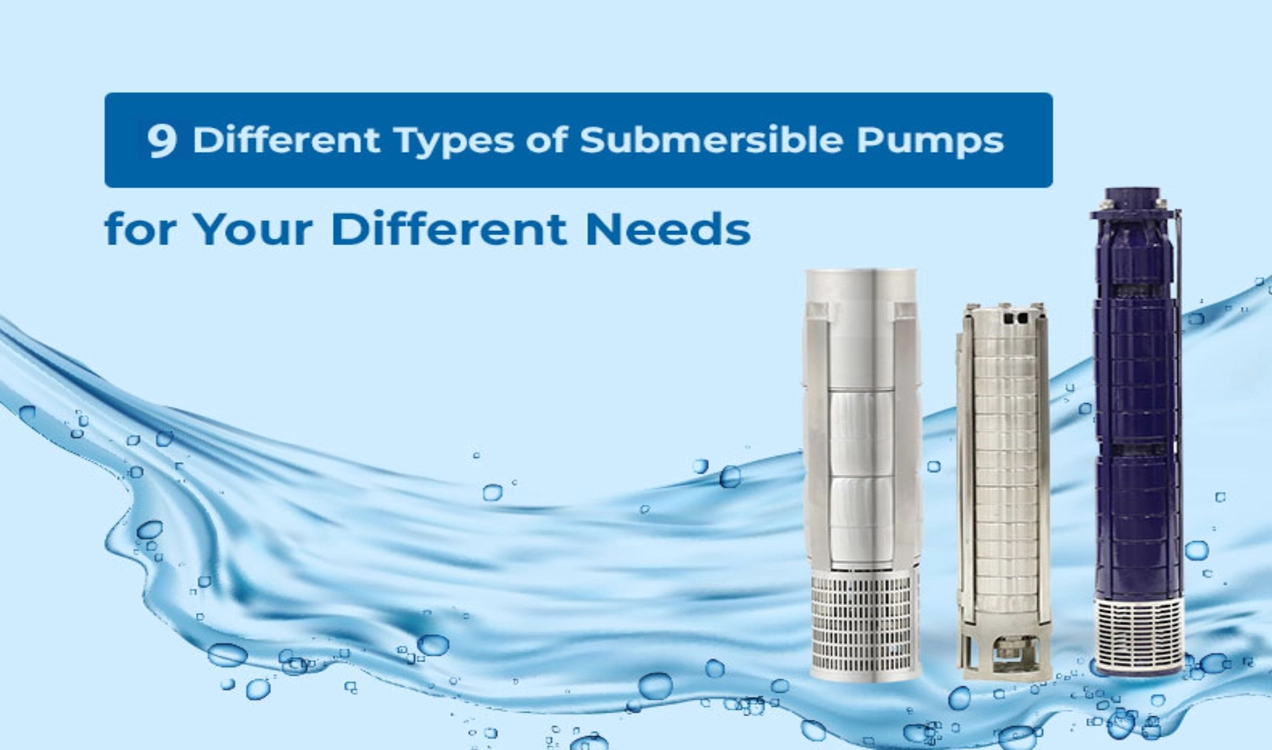
Submersible pumps play a vital role in modern water management systems. From agricultural irrigation and residential water supply to industrial drainage and sewage handling, these pumps are widely used because of their efficiency and durability.
Unlike surface pumps, a submersible pump operates while completely submerged in water. This design allows the pump to push water toward the surface rather than pull it, which improves efficiency and reduces the risk of cavitation.
Today, submersible pumps are used across multiple industries including agriculture, mining, construction, wastewater management, and municipal water supply.
In this guide, we will explore the different types of submersible pumps and their typical applications so that you can better understand which pump is suitable for your requirements.
What is a Submersible Pump?
A submersible pump is an electric pump that operates underwater. The pump and motor are sealed together and placed directly inside the fluid that needs to be pumped.
The main function of a submersible pump is to lift water or other liquids from underground sources such as borewells, wells, tanks, or drainage pits.
The motor drives an impeller that pushes water upward through a pipe to the surface. Because the pump pushes water rather than pulling it, submersible pumps are usually more energy efficient than surface pumps.
Another major advantage is that the pump remains underwater, which helps cool the motor and reduces noise during operation.
Submersible pumps are widely used for:
- Borewell water extraction
- Agricultural irrigation
- Residential water supply
- Industrial water transfer
- Sewage and wastewater drainage
In many groundwater systems, the pump is connected to a submersible motor, which provides the power required to move water from deep underground sources.
How Submersible Pumps Work
A submersible pump works through a sealed electric motor connected to a multi stage pump assembly.
When electricity is supplied to the motor, it rotates a shaft that drives the impellers inside the pump. These impellers create pressure that forces water upward through the discharge pipe.
Since the entire unit is submerged in water, the surrounding fluid naturally cools the motor and helps maintain stable performance.
The key components of a typical submersible pump include:
- Electric motor
- Pump casing
- Multiple impellers
- Diffusers
- Shaft and bearings
- Seals to prevent water entry
This compact design allows submersible pumps to operate efficiently even at significant depths.
9 Different Types of Submersible Pumps
Submersible pumps are designed in several configurations depending on the type of liquid being handled and the depth of the source.
Below are some of the most common types used in residential, agricultural, and industrial applications.
1. Bladder Pumps
Bladder pumps are commonly used in environmental monitoring and groundwater sampling applications where maintaining sample purity is important.
These pumps use compressed air to push liquid through a flexible bladder system. Because the fluid does not come into direct contact with the pump components, contamination risks are minimized.
Bladder pumps are typically used in:
- Environmental monitoring
- Groundwater testing
- Chemical sampling
They are particularly useful when low flow rates and high sample integrity are required.
2. Grinder Pumps
Grinder pumps are designed for sewage and wastewater applications. They are capable of grinding solid waste into smaller particles before pumping it into a sewer system.
This grinding mechanism prevents blockages in pipelines and ensures smooth wastewater transportation.
Grinder pumps are commonly used in:
- Residential sewage systems
- Basement drainage
- Wastewater treatment systems
They are ideal for locations where gravity drainage is not possible.
3. Deep Well Submersible Pumps
Deep well pumps are specifically designed to extract water from deep underground wells.
These pumps are widely used in agricultural irrigation and residential water supply systems where groundwater is the primary water source.
Deep well pumps are usually installed hundreds of feet below the surface and are designed to operate continuously in submerged conditions.
Their durable construction allows them to handle long operating hours with minimal maintenance.
4. Borehole Submersible Pumps
Borehole pumps are commonly used in drilled borewells where groundwater needs to be extracted from deep aquifers.
A borehole is a narrow vertical shaft drilled into the ground to access underground water reserves.
Borehole submersible pumps are designed with slim bodies so they can fit inside narrow borewell casings.
These pumps are widely used in:
- Agricultural irrigation
- Municipal water supply
- Industrial water extraction
- Construction sites
Borewell pumps are among the most widely used submersible pumps in regions where groundwater is the primary water source.
5. Dry Pit Submersible Pumps
Dry pit submersible pumps are designed for installations where the motor remains in a dry chamber while the pump handles liquid in a nearby wet well.
These pumps combine the advantages of submersible pumps with easier access for maintenance.
Dry pit systems are typically used in:
- Wastewater treatment plants
- Industrial drainage systems
- Large municipal pumping stations
They are often chosen when maintenance accessibility is important.
6. Stainless Steel Submersible Pumps
Stainless steel pumps are designed for environments where corrosion resistance is essential.
The stainless steel construction allows the pump to handle aggressive fluids, mildly acidic water, or saline conditions without corrosion damage.
These pumps are commonly used in:
- Industrial water processing
- Chemical handling systems
- Coastal water extraction
- Food processing industries
Because of their durability, stainless steel pumps are widely used in demanding operating environments.
7. Oil Filled Submersible Pumps
Oil filled pumps use oil inside the motor chamber for lubrication and cooling.
This design helps protect the motor components and allows the pump to operate reliably under continuous load.
Oil filled pumps are commonly used in:
- Agricultural irrigation systems
- Industrial water transfer
- Residential borewell installations
The oil inside the motor helps prevent overheating and improves motor lifespan.
8. Submersible Utility Pumps
Utility pumps are portable submersible pumps designed for temporary water removal applications.
They are lightweight and easy to install, making them useful for small scale pumping needs.
Typical applications include:
- Draining flooded basements
- Removing water from construction sites
- Emptying water tanks or pools
Because they require minimal installation, utility pumps are commonly used for emergency drainage situations.
9. Booster Pumps
Booster pumps are used when water pressure in a pipeline system is too low.
These pumps increase water pressure so that water can be delivered to higher floors of buildings or distributed evenly through large piping systems.
Booster pumps are widely used in:
- High rise residential buildings
- Hotels and commercial buildings
- Water distribution networks
They are essential when municipal water pressure alone is not sufficient.
Applications of Submersible Pumps
Submersible pumps are used across many industries because of their ability to efficiently move water from underground or submerged sources.
Some of the most common applications include:
- Agricultural irrigation: Farmers rely on submersible pumps to extract groundwater for irrigation systems, ensuring consistent water supply for crops.
- Residential water supply: Many homes use borewell submersible pumps to provide drinking water and household water supply.
- Industrial water transfer: Factories and processing plants use submersible pumps to move water between tanks or cooling systems.
- Sewage and wastewater handling: Submersible pumps are commonly installed in drainage pits to remove wastewater or sewage.
- Municipal water systems: Cities and municipalities use large capacity submersible pumps to maintain water distribution networks.
Conclusion
Submersible pumps are one of the most reliable solutions for water extraction, drainage, and fluid transfer. Their ability to operate underwater makes them highly efficient and suitable for a wide range of applications.
From deep well water supply and agricultural irrigation to wastewater management and industrial operations, different types of submersible pumps are designed to meet specific operational needs. Understanding the various pump types helps in selecting the most suitable solution for your system.
With decades of engineering expertise, Unnati Pumps Pvt. Ltd. has been manufacturing high performance submersible pumps and submersible motors since 1969. Our pumping solutions are trusted by agricultural, industrial, and infrastructure projects across more than 50 countries. Built with advanced manufacturing processes and strict quality standards, our pumps are designed to deliver durability, efficiency, and reliable water performance in demanding environments.
If you are looking for dependable pumping solutions for your project, exploring professionally engineered submersible pumps and motors from Unnati Pumps can help ensure long term efficiency and consistent water supply.