

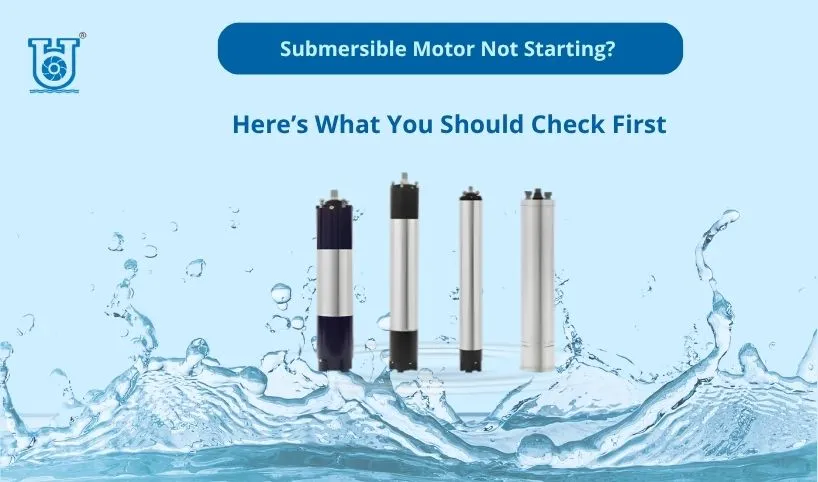
Suppose there is a necessity to get water, and nothing begins to move. You could switch on, but there is no sound. Well that’s a problem then! Farms, businesses and homes are disrupted immediately. But lots of startup issues possess straightforward causes. Others start with unreliable electric supply problems. The others are related to wiring or overloading. Low water conditions can bring it to a stop. Check the basics before the automobile failure is thought to be due to complete motor failure. When smart troubleshooting is used, there are other, latent cracks that may be found. Repair costs can be avoided by carrying out early checks. Being aware of how to check wastage of time per day. These are the basic detective procedures to start with, prior to contacting professionals.
1. Check the Incoming Power Supply
Most startups first fail due to problems of power. Start with a check of the voltage up to the motor. Typically, low voltage does not allow startups to perform smoothly. Protective shutdowns can be caused abruptly because of high voltage. Check breakers for unusual tripping. Check fuses for visible burn damage. Free-moving electrical connections can cause a current to cease. Loss of phase supply will put the motors to a stop. Check that the starter is getting input power properly. Consistency of the test is supplied when starting up. Simple electrical faults are ignored by a number of users. This initial examination is a punctuality of issues.
2. Inspect Cable and Wiring Connections
Faulty wiring may cause the motor to grind to a halt. Inspect any loose terminals in cables. Weak connections can disturb power in a most unpredictable manner. Wires that have been burnt can be evidence of past overload issues. Damage to underground cables can be easily concealed. Intrusion of moisture can have a negative impact on the performance of insulation. Check connectors: corroded or overheated. Faults that arise through cracks in insulation could pose hazardous faults. Test Continuity: in case wiring breaks occur. A single wire that has been damaged is a problem. Faulty wiring tends to be better than the actual condition. Fixing them can get the startup speed back in no time.
3. Examine the Control Panel Components
The motor startups are guided by the control panel. Malfunctioning parts could end up failing in operation. Check the contactors for sticking or worn contacts. Check overshot tripped relays. Malfunctioning timers can have adverse effects on automated systems. Switches that have damaged the contacts can interrupt commands unexpectedly frequently. Search inside the panels. Accumulation of dust can influence the performance of electrical contacts. Listen for unusual clicking in attempts to start up. A weak starter might not start, or even start quietly. The older systems have panel faults. Causes that are ignored are sometimes easily spotted during inspection.
4. Look for Overload Protection Trips
Overload systems are used to prevent motors from operating in unsafe conditions. Check up on whether protection has been tripped within the recent time period. Overloading of pumps can overstrain the parts. Clogged impellers may multiply resistance to operation to a dismal extent. Shutdown protection can also be caused by dry running. Lower water levels will have a serious negative impact on cooling. A factory reset should be done after root cause identification. Repeated restarting is likely to exacerbate damage to the motor. Overheating can reduce the inner winding insulation. Accumulation of sand can add an unanticipated load. Numerous accidents start with overlooked overload signals. This check aids in avoiding in-depth damage to equipment.
5. Check for Mechanical Pump Jamming
Rotation can be completely blocked by mechanical means. The power can still be fed to the motor normally. Moving components may be caught up in the sands. Inevitably, debris may clog impellers in an unsuspecting manner. UPSaid bearings can cause problems of resistance at startups. Internal friction can also be excessive due to rust. The humming sounds tend to indicate the problems of blockages in the shafts. Electrical failures can be similar to mechanical failures. Ease of neglecting may show on just a physical examination. There are times when it might be required to lift the pump. A high number of motors are being replaced without following up on jams. This is a step that usually avoids making expensive, erroneous decisions.
6. Test the Capacitor Condition
Starting torque is usually adversely affected by weak capacitors. The motor can vibrate without moving. Look at swelling or leakage. Defective capacitors might require immediate replacement. Use of the appropriate diagnostic instruments to check performance on tests. Failure of capacitors is typical of old-age systems. A mere replacement can be a solution. The carelessness of windings should not be overlooked with the capacitor faults. This issue is frequently the direction of startup hesitation. Capacitors ensure the good performance of motor starting. This is a little bit simple, but a worthwhile check. Capacitor weakness is a starting issue for many.
7. Inspect Motor Windings for Damage
Broken windings can be a cause of inadequate motor startup. Overheating may cause burnt windings. Response can be halted by short-circuiting. Insulation resistance test causes an internal defect to come into sight. Odor or change of color can be an indicator of damage. Winding issues may only be repaired by an expert. Grasping of internal faults becomes worse with neglect. Varying overload can weaken the strength of the windings. Damage to a winding has a serious impact on performance. This check makes it clear that there is an actual motor condition. It assists in decouple repair and replacement choices. Signs of winding damage should not be disregarded.
8. Verify Water Levels and Dry Run Protection
The low level of water can automatically shut down. Dry run systems avoid severe damage to pumps. Monitor the levels in the borewells prior to restarting. Recovery of water sources can influence the time of start-up. Defective sensors can be used to create false shutdown modes. Checks can also be required in float switches. The problem of water shortage is not taken into consideration by many users. Components can be ruined within a short time due to dry running. Establish that there is water before more in-depth troubleshooting. The protection systems are also to be inspected. Faults related to water tend to crop up in numerous instances. This is a quick way of solving problems.
9. Inspect the Check Valve Condition
Malfunctioning check valves may have an effect on the starting pressure. There can be an additional motor resistance due to backflow. Accretion of sediments can obstruct the motion of the valves. Nonsticking valves are able to place a strain on the system. Lack of balance of pressure can influence the response of the startup. Check the parts of the valves. Broken valves can be unnoticed at a very young age. A blocked valve adds to the operating load. This can cause overload protection to pop. Checking the valves helps to make it easier to pump. Numerous latent vices start with valve troubles. Doing this step enhances system reliability.
10. Review Maintenance and Usage History
The history of maintenance tends to show patterns of recurrence. Putting off servicing could enhance start-up frustrations. Excessive use may cause the wearing off of motor components. New repairs can have posed some latent defects. System performance can change based on changes in loads. Avoidable outages are due to poor maintenance. Record check services to regularly note problems. Depending on usage is a possible cause of unexpected start-up issues. Routine maintenance contributes to a lengthening of equipment life. Little minute faults tend to increase with time. There is a higher accuracy in fault diagnosis through reviewing the history. This last test is a wrap-up.
Conclusion
Failure is not an issue with a silent submersible motor. Most startup problems start with basic faults. Most significant issues are power, wiring, overloads and water. Some mechanical jams and weak components also play a role. Places would be replaced at a high cost and easily ensured by careful checks. Evaluate step-by-step prior to big decisions.
Regular inspection can help prevent sudden failure and reduce repair costs. Using a reliable motor from Unnati Pumps can also improve long-term performance, as quality components are designed to handle voltage fluctuations and demanding conditions.