

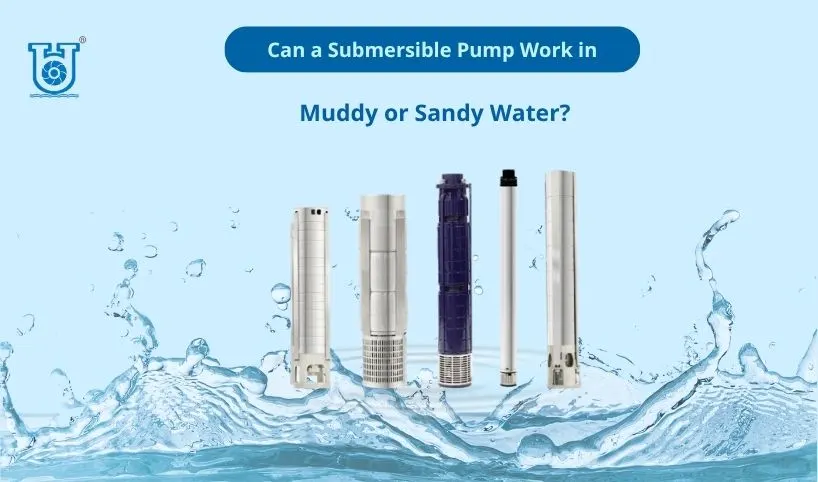
Submersible pumps function well in deep waters to supply water for irrigation, domestic, and industrial purposes. These pumps extract water from borewells and open wells throughout rural areas. But many borewell owners doubt whether submersible pumps can operate well in muddy or sandy water. Often, the water of borewells contains sand, silt, or mud, which may affect the durability and performance of a submersible pump. Thus, users need to know what to do in such conditions to safeguard their pumps while extracting water from borewells. Unnati Pump offers guidance to its customers in this matter.
Causes of Sandy or Muddy Water Conditions
When a new borewell is created by drilling, lots of mud and sand get mixed in the water. Borewells in sandy regions contain fine particles of sand, silt, and clay mixed in the water. If a borewell is poorly developed, the water is most likely to be sandy or muddy. If the casing of the borewell is damaged or poorly installed, the water will not remain clean. Too frequent pumping in a borewell can also damage the layer of soil that holds water. Seasonal changes in the layers of the soil can be another cause of muddy water in a borewell. When a submersible pump is used in a shallow open well, loose sediments may make the water sandy or muddy.
Is It Possible to Operate a Submersible Pump in Muddy or Sandy Water?
Users often wonder whether it will be safe to run their submersible pumps in muddy or sandy water. They can operate pumps only to a limited extent after following certain precautionary measures as directed by the manufacturer. Unnati Pump designs most of its submersible pumps with the capability of handling small amounts of sand or silt. However, prolonged exposure to large amounts of these particles may ultimately reduce the longevity of a submersible pump.
Submersible pumps are typically made using high-quality stainless steel and other wear-resistant materials, allowing them to handle some amount of sand or clay in water. However, when the mud or sand content becomes too high, it can cause increased wear and tear on internal moving parts. This can reduce pump efficiency over time and lead to more frequent breakdowns. Continuous operation in heavily muddy or sandy water can also shorten the overall lifespan of the pump.
Therefore, it is best to run a submersible pump either in slightly muddy water or operate for only a limited time in heavily sandy or muddy water.
Adverse Effects That a Submersible Pump Faces in Sandy or Muddy Water
Sand particles and mud can be abrasive to the parts of a submersible pump. When these things enter the pump body with water, the following types of damage can occur to the pump very soon.
Damage to the Impeller
In a submersible pump, the impeller is responsible for pushing water upward, by rotating at a high speed. Large sand particles can rub against the impeller body, causing erosion of this important part, leading to a reduction in the pump efficiency. A damaged impeller results in less discharge of water, more energy consumption, and reduced pumping pressure. If the impeller is severely damaged, it may need replacement.
Wear and Tear of the Bearings
The rotating shaft of the pump is supported by the bearings. Sand particles cause friction while rubbing with the bearings, resulting in overheating and failure of the bearing system before its stipulated lifetime. Users can identify bearing wear by the unusual sounds and vibrations when the pump is running, which should be addressed immediately. Otherwise, bearing failure can lead to the complete breakdown of a submersible pump.
Indirect Damage to the Motor
The presence of too many sand particles in the water can cause indirect harm to the motor of a submersible pump. The motor gets overheated while moving sandy or muddy water, as it needs to consume more power for this work. The insulation of the motor may get damaged, which ultimately reduces the lifespan of the motor. So, it is essential to protect the motor from getting overloaded while running in muddy or sandy water.
Blockage of Water Passages
Large sand or mud particles can block the internal passages of a submersible pump, stopping the water flow. Excessive mud can also clog the intake screen of the pump, thereby reducing the pump’s efficiency. The blockage in the pump can be detected by a decrease in the water output, irregularity in the water pressure, and increased operation time.
Effective Tips to Run Submersible Pumps Safely in Sandy or Muddy Water
If the water source contains sand or mud, it is essential to follow the instructions for proper installation and maintenance of the submersible pumps to reduce the risks of damage.
1. Proper Development of the Borewell
When a new borewell is made, it should be properly flushed to remove all loose particles before installing a submersible pump there. The elimination of all suspended particles makes the water clearer and ensures the safety and reliability of the pumping system.
2. Installation of a Sand Filter
The installation of a sand guard or filter saves the pump from the entry of large particles. It acts as a protective barrier against all abrasive materials that could cause harm to a submersible pump. It increases the longevity of the pump and improves the pump performance.
3. Selection of the Right Pump Material
Submersible pumps should be made of wear-resistant materials that can withstand corrosion even in sandy water. Unnati Pump uses the best quality stainless steel to make different parts of its submersible pumps.
4. Maintain Proper Depth for Pump Installation
A submersible pump should be installed at the accurate depth in a borewell, to prevent drawing in sediments from the bottom of the well. Expert engineers maintain a sufficient distance between the pump and the borewell base to stop sand intake.
5. Regular inspection and maintenance
Routine inspection of a submersible pump is essential when it is operating in sandy or muddy water. Thus, any sign of wear and tear can be detected at an early stage, preventing major failure of the pumping system.
Conclusion
Therefore, there is an acceptable limit for running a submersible pump in sandy or muddy water. Continuous exposure to large volumes of sand or mud can damage different parts of the pump. However, Unnati Pump adopts all protective measures to safeguard the submersible pumps in such adverse conditions while manufacturing, installing, and maintaining these pumps.