

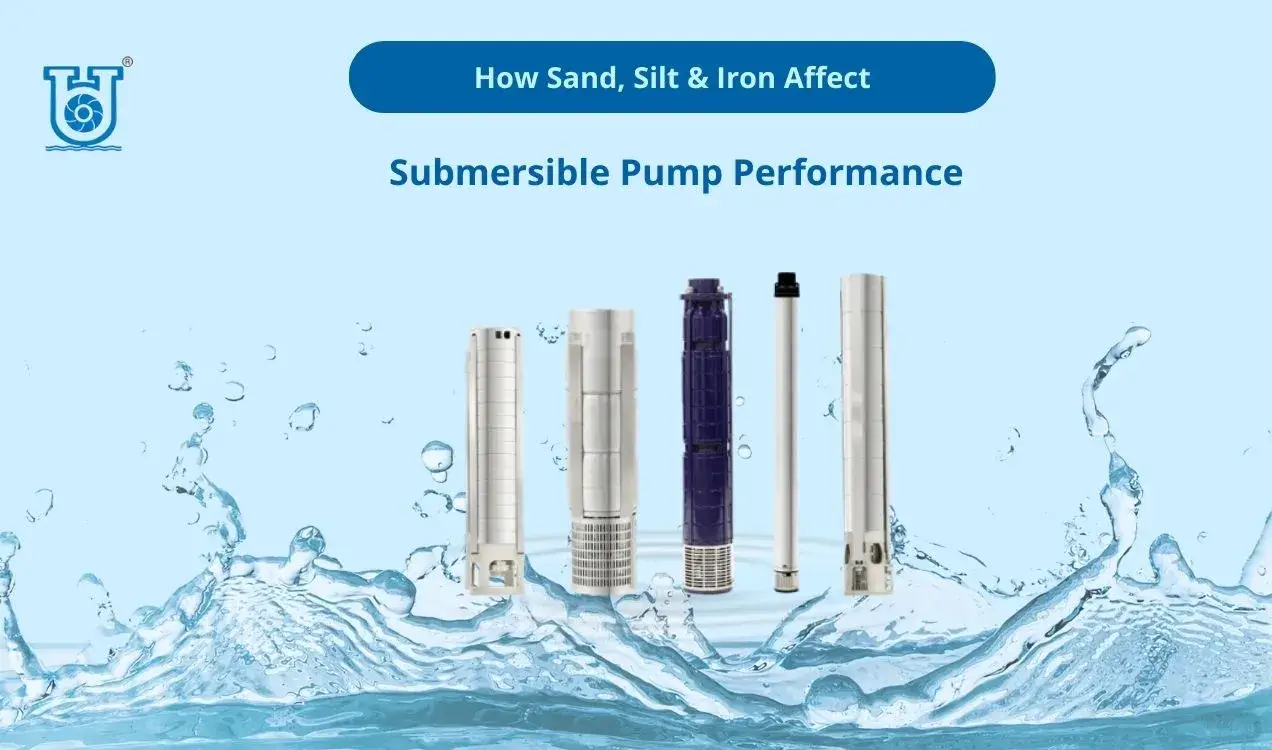
Submersible pumps are used to remove water from one place to another. These pumps are widely used to clear floodwater, for irrigation in fields, and to extract groundwater from wells or bores. Hence, municipal corporations and various industries need to use these pumps. However, many impurities often remained mixed with water, which adversely affects the usual function of submersible pumps.
Sand, silt, and iron particles are the most common impurities found in all types of accumulated water. These hard particles can be harmful for a submersible pump and reduce its longevity. Though these pumps are designed to tolerate small quantities of hard particles, prolonged exposure of a pump can result in untimely wear and tear.
Effects of sand on the performance of a submersible pump
The presence of many sand granules in the water can affect a submersible pump in the following ways:
- Abrasion of pump parts: Sand particles are highly abrasive, causing fast wear and tear of the impeller and the motor shaft bearings. Thus, the submersible pump will vibrate more and gradually lose balance while functioning. If hundreds of sand granules are present in the water, the longevity of the pump will be reduced drastically.
- Blockage of pipelines : When lots of sand particles get inside the pump casing and pipes, the flow of water can be blocked. Even some sand grains in the pipelines of a submersible pump can slow down the water flow, which will make the pump motor work harder to get the job done.
- More friction inside the pump: Sand grains create constant friction among all pump parts. Hence, more electrical power is needed to keep the pump functioning at a normal pace. So, the electricity bill increases to a large extent when the submersible pump operates in sandy water.
- Overheating of the motor: The usual cooling of the pump motor can be obstructed by the presence of lots of sand in the water surrounding the submersible pump. The overheating of the pump can damage various parts, for which continuous water circulation is essential.
Outcome of the presence of silt in water on a submersible pump
Silt particles are much finer compared to sand granules. Hence, the result of the presence of silt is different from that caused by sand. This is how silt affects the functioning of a submersible pump as follows:
- Slow erosion of pump parts: The rubbing of silt particles with impeller vanes, bowl surfaces, and rings of a submersible pump causes wear out of these parts gradually. This slow and steady abrasion of pump parts reduces the efficiency of these pumps and increases the risk of backflow of water into the pump body.
- Settling of silt inside the pump: If the pressure of water is low, silt can deposit inside the pump body. Silt is more likely to accumulate behind the impeller and reduce the area of passages through which water flows. The pump’s priming can be damaged due to the silt accumulation, for which the pump may face trouble in restarting.
- Slow damage of pump bearings: The deposition of silt on the internal parts of a submersible pump can gradually reduce the durability of this device. The increase of friction among bearings due to silt accumulation may lead to misalignment and vibration, which are signs of the failure of the pump function.
Impact of iron particles or dissolved iron on a submersible pump
Iron can be present in water in the dissolved (ferrous) form. Solid iron (ferric) particles can also be found in water, where submersible pumps are put into application. The following damages of a submersible pump can be caused by the presence of iron in any form in the water:
- Deposition of iron on pump surfaces: When dissolved iron comes in contact with the heated surface of a submersible pump, it turns into ferric hydroxide. So, a layer of sticky reddish-brown particles of this compound can cover the impellers and reduce the speed of water flow. The efficiency of the pump is reduced in such cases. Too much deposition of iron can cause an imbalance of the impeller and damage the pump shaft.
- Corrosion of metal parts of the pump: Several parts of a submersible pump are built of cast iron or steel. So, iron-rich water can corrode the pump casing, motor body, and impeller rings. Surfaces of these parts become rough due to corrosion, resulting in the reduction of fluid pressure.
- Clogging caused by iron bacteria: Flakes of rust can block the water passages, stopping the normal flow of water. Some microorganisms, mainly bacteria, feed on iron and form a slimy or gelatinous layer on well screens, restricting the flow of water into a submersible pump.
- Restricts cooling of the pump: If the pump motor gets coated with rust or iron particles, it cannot be cooled easily by the surrounding water. The motor can be overheated, resulting in tripping or even burning out of the motor.
A few solutions suggested for protecting submersible pumps
It is best to choose submersible pumps made of high-quality stainless steel. The impeller and the shaft of the pump should be made of water-resistant material. Sand separators or sediment filters can prevent the entry of sand into the pump body.
Activated carbon filters or manganese dioxide filters can be used to eliminate iron from water passing into the pumps. Regular maintenance of a submersible pump can help in identifying the early signs of wear and tear due to the presence of sand, silt, and iron. The quality of water can be checked for the presence of sand, silt, and iron particles before placing the pump deep into the water.
Conclusion
The purchase of a submersible pump is a worthy investment for different types of agricultural, residential, or industrial applications. Since the presence of sand, silt, and iron in the water can be harmful to the pump, suitable measures should be adopted to maintain its performance and longevity. In this way, owners can protect their pumps from potential damage, enhance their durability, and make the pumps work faster.