

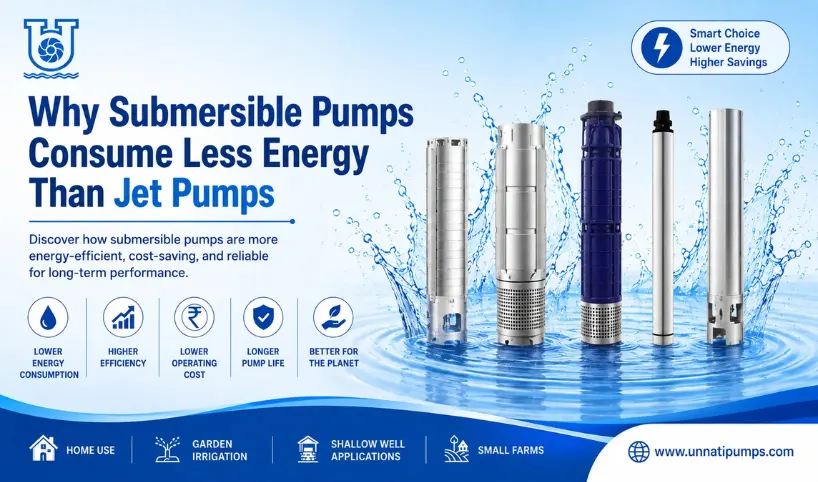
Water pumps play an important role in agriculture, homes, industries, and commercial buildings. Whether you are irrigating crops, supplying water to a residential property, or managing an industrial process, choosing the right pump can have a significant impact on electricity costs. One of the most common comparisons people make is between submersible pumps and jet pumps. While both are designed to move water efficiently, they operate in very different ways.
One question many buyers ask is, why do submersible pumps consume less energy than jet pumps? The answer lies in their design, installation, and operating efficiency. A submersible pump works inside the water source, while a jet pump remains above ground and pulls water upward. This difference may seem simple, but it greatly affects how much electricity each pump uses.
In this guide, we will explain how both pump types work, compare their energy consumption, discuss the factors that influence efficiency, and help you determine which option is best for your needs.
Understanding How a Submersible Pump Works
A submersible pump is designed to operate completely underwater. Both the motor and the pump are sealed inside a waterproof housing and installed below the water level in a borewell, well, or storage tank.
Instead of pulling water upward, the pump pushes water toward the surface. Since water naturally surrounds the pump, it does not need to overcome the resistance involved in suction. This allows it to move water more efficiently while using less electricity.
Submersible pumps are commonly used for:
- Agricultural irrigation
- Borewell water extraction
- Residential water supply
- Commercial buildings
- Industrial water transfer
- Municipal water systems
Their compact design and efficient operation make them one of the most popular choices for continuous water pumping.
How Does a Jet Pump Work?
A jet pump is installed above the ground, usually near the water source. It works by creating suction that pulls water from a well through a suction pipe before pushing it to the required location.
This pumping method requires additional energy because the pump must first lift the water before delivering it.
Jet pumps are generally used for:
- Shallow wells
- Domestic water supply
- Small farms
- Garden irrigation
- Low depth water applications
Although jet pumps can perform well in certain situations, their suction-based operation makes them less energy efficient, especially when water needs to be lifted from greater depths.
Why Submersible Pumps Use Less Energy
Several engineering advantages make submersible pumps more energy efficient than jet pumps.
1. No Energy Is Lost in Suction
The biggest reason submersible pumps consume less electricity is that they push water rather than pull it. Because the pump is already inside the water:
- There is no suction loss.
- Water enters the pump naturally.
- Less mechanical effort is required.
- The motor operates more efficiently.
Jet pumps spend additional power creating enough suction to lift water from below ground.
2. Higher Hydraulic Efficiency
Hydraulic efficiency refers to how effectively a pump converts electrical energy into water movement. Submersible pumps typically offer higher hydraulic efficiency because:
- Water flows directly into the impeller.
- Friction losses are reduced.
- There are fewer pressure drops.
- Water movement is smoother.
As a result, more of the electricity supplied to the pump is converted into useful work.
3. Better Motor Cooling
Heat reduces motor efficiency over time. Since submersible pump motors operate underwater, the surrounding water continuously cools the motor. This offers several advantages:
- Improved operating efficiency
- Lower operating temperature
- Reduced risk of overheating
- Longer motor life
- Stable performance during long operating hours
Jet pumps rely on air cooling, which is generally less effective, especially during hot weather or extended operation.
4. Reduced Friction Losses
Water loses pressure whenever it travels through pipes. Jet pumps often require:
- Long suction pipes
- Foot valves
- Additional fittings
- More bends and joints
Each of these components creates resistance, increasing energy consumption. Submersible pumps eliminate most suction-related friction because they are installed directly inside the water source.
5. Better Performance at Greater Depths
The deeper the water source, the harder a jet pump must work. As depth increases:
- Suction becomes less efficient.
- Pump performance decreases.
- Electricity consumption rises.
Submersible pumps are specifically designed for deep water applications. Whether the borewell is 100 feet or 800 feet deep, the pump pushes water upward efficiently without losing significant performance.
Energy Consumption Comparison
Although actual electricity usage depends on pump size, operating hours, and water depth, a general comparison looks like this. For a closer look at real-world figures, see how much electricity a submersible pump consumes.
| Feature | Submersible Pump | Jet Pump |
|---|---|---|
| Operating method | Pushes water | Pulls water |
| Suction loss | None | Higher |
| Hydraulic efficiency | High | Moderate |
| Motor cooling | Water cooled | Air cooled |
| Energy consumption | Lower | Higher |
| Performance in deep wells | Excellent | Limited |
| Maintenance frequency | Lower | Higher |
Factors That Affect Pump Energy Consumption
Even the most efficient pump can waste energy if it is not selected or installed correctly.
Pump Size
Choosing an oversized pump leads to unnecessary electricity consumption. A properly sized pump should match:
- Water demand
- Borewell depth
- Required pressure
- Flow rate
Oversized pumps consume more electricity without providing additional benefits.
Installation Quality
Incorrect installation reduces efficiency. Common installation issues include:
- Improper pipe sizing
- Air leaks
- Poor electrical connections
- Incorrect cable sizing
- Misaligned installation
Professional installation helps ensure the pump operates at its highest efficiency.
Water Depth
As water levels change throughout the year, pumping requirements also change. Submersible pumps handle changing water levels much better because they remain underwater during operation. Jet pumps become less efficient as the water table drops.
Pipe Diameter
Using pipes that are too small increases pressure losses. Proper pipe sizing:
- Improves water flow
- Reduces friction
- Lowers electricity usage
- Protects the motor
Pump Maintenance
Regular maintenance helps maintain efficiency. Maintenance should include:
- Inspecting electrical connections
- Cleaning filters
- Checking pipe leaks
- Monitoring voltage supply
- Replacing worn components when necessary
A neglected pump often consumes more electricity than a properly maintained one.
Long Term Cost Savings
Many buyers focus only on the purchase price when comparing pumps. However, electricity costs over several years often exceed the initial investment.
For example, if a pump operates:
- 6 to 10 hours daily
- Throughout the irrigation season
- For many years
Even a small improvement in efficiency can result in substantial savings.
Lower energy consumption also means
- Reduced operating costs
- Lower maintenance expenses
- Longer service life
- Better return on investment
For farms and businesses with continuous water requirements, these savings become even more significant.
Applications Where Submersible Pumps Offer Maximum Efficiency
Submersible pumps are widely used across different sectors because they deliver high performance while consuming less electricity. Since these pumps operate directly inside the water source, they experience minimal energy loss and maintain a steady flow of water even during long operating hours. Their efficient design makes them an excellent choice for applications where reliability, continuous performance, and lower operating costs are important.
Agriculture
Agriculture is one of the largest users of submersible pumps. Farmers often rely on pumps for several hours each day to irrigate crops, fill water storage tanks, and supply water to livestock. Because irrigation systems operate frequently, electricity costs can become a significant part of farming expenses.
Submersible pumps help reduce these costs by using energy more efficiently than many other pump types. Their ability to deliver a consistent water supply without losing efficiency allows farmers to irrigate fields more effectively while keeping electricity consumption under control.
Residential Water Supply
Many homes depend on borewells as their primary source of water. In these situations, submersible pumps provide a dependable solution for residential water supply supplying overhead tanks, kitchens, bathrooms, and gardens. Since the pump is installed below the water level, it operates quietly and delivers consistent water pressure without frequent interruptions.
Their energy efficient operation also helps homeowners reduce monthly electricity bills, especially in households where the pump runs multiple times each day.
Commercial Buildings
Commercial properties such as hotels, apartment complexes, schools, hospitals, and office and construction projects require a continuous and dependable water supply throughout the day. Any interruption can affect daily operations and customer satisfaction.
Submersible pumps are well suited for these environments because they can handle continuous operation while maintaining excellent energy efficiency. Their reliable performance helps ensure a steady supply of water for drinking, sanitation, cooling systems, and other essential services, all while keeping operating costs lower.
Industrial Applications
Industries often require large volumes of water for manufacturing processes, cooling systems, cleaning operations, and other production activities. Since these pumps may run for extended periods every day, even small improvements in energy efficiency can result in significant cost savings over time.
Submersible pumps are designed to deliver high flow rates with lower power consumption, making them a preferred choice for many industrial applications. Their ability to operate continuously with minimal maintenance helps businesses reduce operational expenses, improve productivity, and maintain uninterrupted production without unnecessary energy waste.
Are Jet Pumps Ever a Better Choice?
Although submersible pumps are generally more energy efficient, jet pumps still have advantages in certain situations.
A jet pump may be suitable when:
- The water source is shallow.
- Installation inside the well is not practical.
- Maintenance access is a priority.
- Water demand is relatively low.
Because the motor is located above ground, servicing a jet pump is usually easier.
However, for deep wells or continuous operation, the higher electricity consumption often makes a submersible pump the more economical option.
Common Myths About Pump Efficiency
Many misconceptions influence buying decisions. Let’s clear up a few common myths.
Myth 1: Bigger Pumps Save More Electricity: A larger pump does not automatically improve efficiency. An oversized pump may consume more electricity while operating below its ideal performance range.
Myth 2: All Pumps Have Similar Efficiency: Different pump designs have different efficiency levels. Motor quality, impeller design, installation, and operating conditions all affect electricity consumption.
Myth 3: Purchase Price Is the Most Important Cost: The purchase price is only one part of the total investment. Electricity, maintenance, repairs, and replacement costs usually represent a much larger expense over the life of the pump.
Myth 4: Maintenance Does Not Affect Energy Consumption: Dirty filters, worn impellers, damaged bearings, and leaking pipes all reduce pump efficiency and increase electricity usage. Regular maintenance keeps operating costs under control.
Tips for Reducing Pump Energy Consumption
Regardless of the type of pump you choose, these practices can improve efficiency.
- Select the correct pump capacity for your application.
- Match the pump with the required flow rate and pressure.
- Use high quality pipes and fittings.
- Install the pump correctly.
- Check voltage regularly.
- Repair leaks immediately.
- Perform routine maintenance.
- Keep electrical components in good condition.
- Replace worn parts before they affect performance.
- Buy pumps from a trusted manufacturer with proven engineering standards.
Why Quality Matters
Pump efficiency is influenced not only by design but also by manufacturing quality. High quality materials, precision engineering, efficient motors, and durable components all contribute to better performance and lower energy consumption.
Choosing a reliable manufacturer ensures consistent water flow, dependable operation, and a longer service life. It also reduces the likelihood of unexpected breakdowns and expensive repairs.
Conclusion
When comparing energy efficiency, submersible pumps clearly have an advantage over jet pumps in most applications. Their ability to push water instead of pulling it, combined with higher hydraulic efficiency, better motor cooling, and lower friction losses, allows them to deliver the same amount of water while consuming less electricity.
Although jet pumps remain suitable for some shallow water applications, submersible pumps are generally the preferred choice for deep wells, agricultural irrigation, residential water supply, commercial buildings, and industrial use where long term efficiency matters most.
At Unnati Pumps, we design and manufacture high performance pumping solutions that combine reliability, durability, and energy efficiency. Whether you need a pump for agriculture, domestic use, or industrial applications, choosing the right submersible pump can help reduce operating costs, improve performance, and deliver dependable water supply for years to come.